Opens in a new tab
CHAMBER TODAY 7:00 PM ONWARDS
CHAMBER AALOK HEALTHCARE, MIRPUR 10, DHAKA
SUBSPECIALTY TRAINED · MS (HPB), BSMMU · FACS

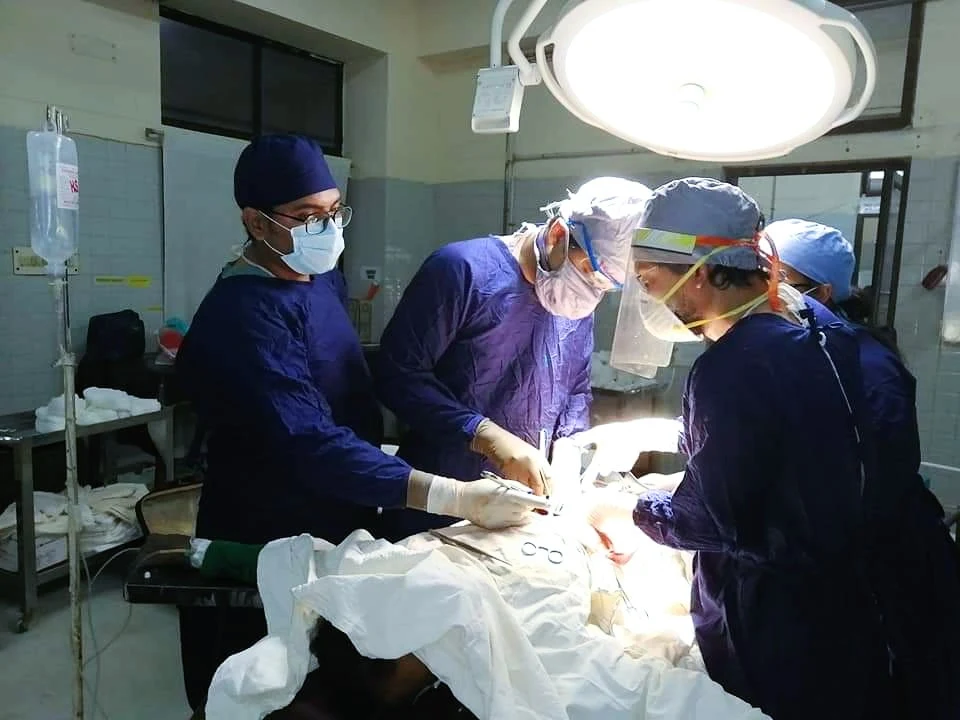
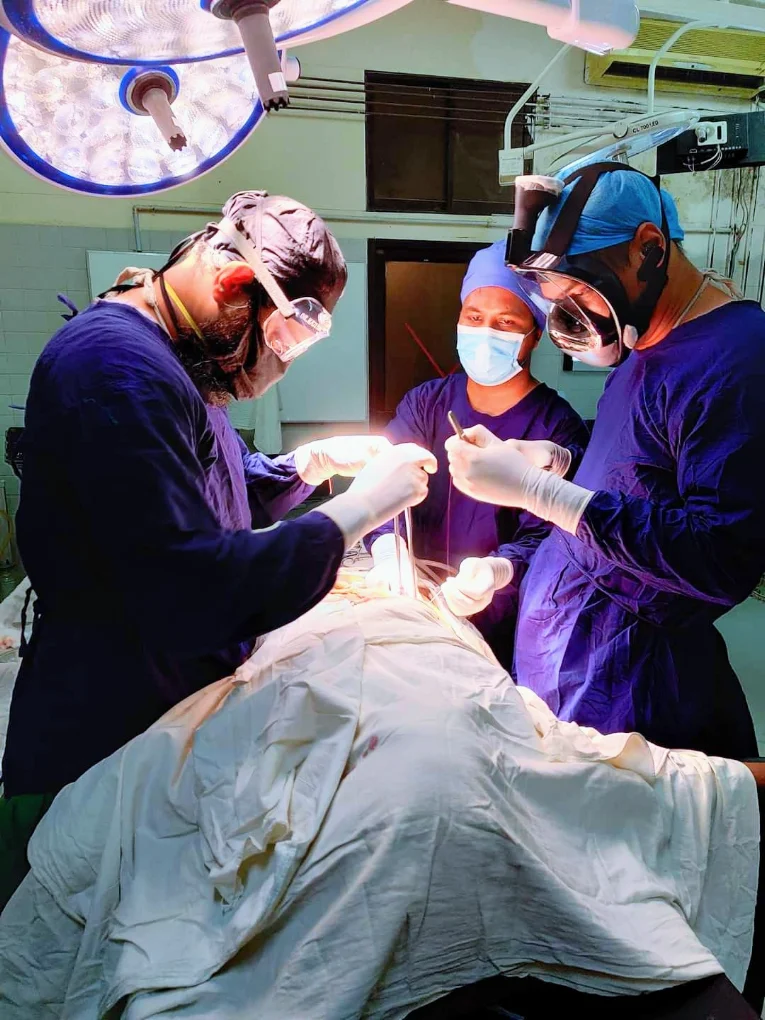
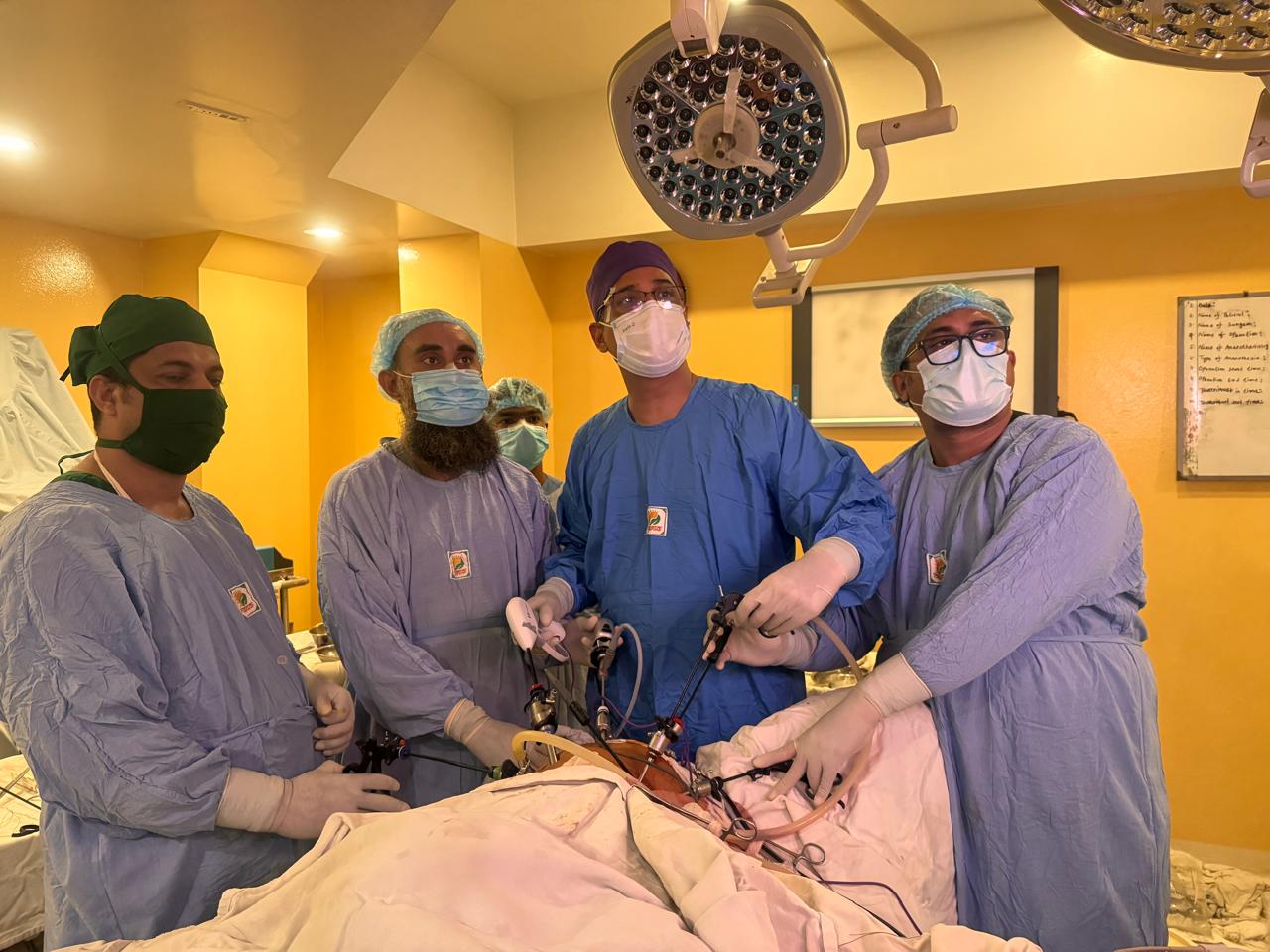
Nineteen years in surgical practice, seven of them in hepatobiliary and pancreatic surgery. 500+ major liver, biliary and pancreatic procedures performed personally, alongside 1500+ laparoscopic operations.
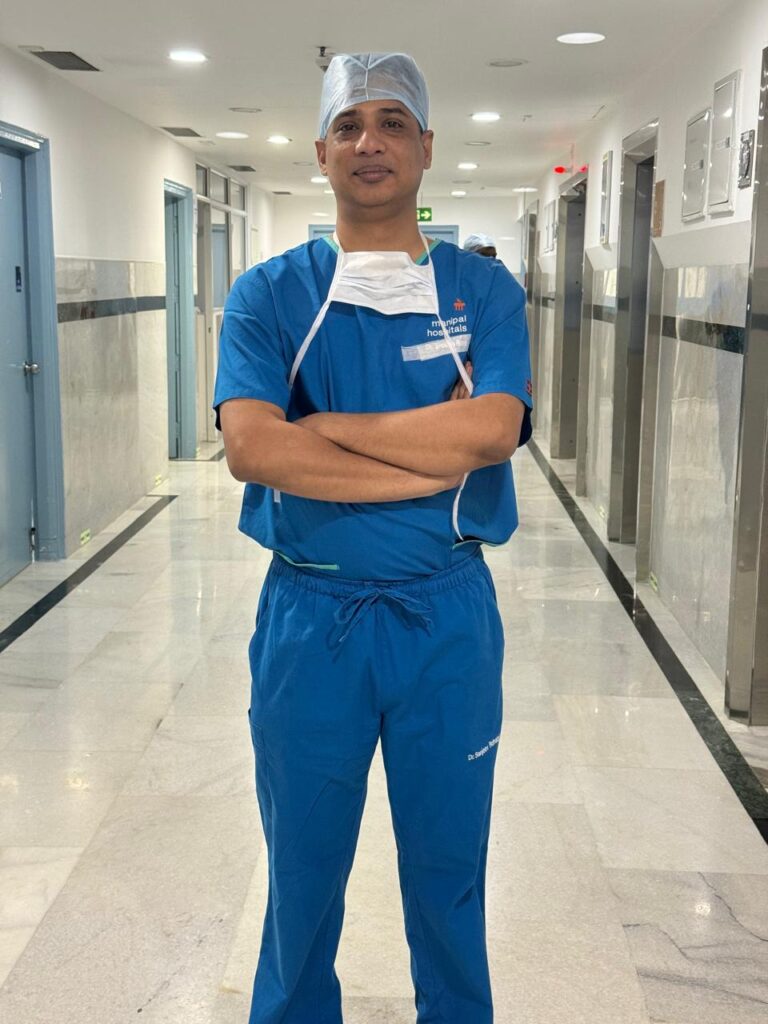
ASSOCIATE PROFESSOR, HEPATOBILIARY SURGERY
RAJSHAHI MEDICAL COLLEGE · BMDC A-38726

19

YEARS IN
SURGICAL PRACTICE

500+

MAJOR HPB
PROCEDURES

15

PEER-REVIEWED
PUBLICATIONS

FACS

AMERICAN COLLEGE
OF SURGEONS, 2020
MBBS MMC 2003FCPS SURGERY 2012MS HPB, BSMMU 2019FACS USA 2020LIVER TRANSPLANT MANIPAL 2024SOSB EXEC. COUNCIL
BANGABANDHU SHEIKH MUJIB MEDICAL UNIVERSITYAMERICAN COLLEGE OF SURGEONSRAJSHAHI MEDICAL COLLEGEDHAKA MEDICAL COLLEGESHAHEED SUHRAWARDY MEDICAL COLLEGESOCIETY OF SURGEONS OF BANGLADESHMANIPAL HOSPITAL, BENGALURUBANGABANDHU SHEIKH MUJIB MEDICAL UNIVERSITYAMERICAN COLLEGE OF SURGEONSRAJSHAHI MEDICAL COLLEGEDHAKA MEDICAL COLLEGESHAHEED SUHRAWARDY MEDICAL COLLEGESOCIETY OF SURGEONS OF BANGLADESHMANIPAL HOSPITAL, BENGALURUBANGLADESH COLLEGE OF PHYSICIANS & SURGEONS
0+
Laparoscopic cholecystectomies
0
Whipple procedures
0
Liver resections
0
Biliary reconstructions
0
Laparoscopic extended cholecystectomy
0+
Major abdominal operations
About the surgeon

Trained for the difficult end of one narrow field

500+

MAJOR HEPATOBILIARY & PANCREATIC PROCEDURES
The liver, the bile ducts and the pancreas share a blood supply, a drainage system and a set of diseases. General surgery treats them separately. Hepatobiliary surgery does not.

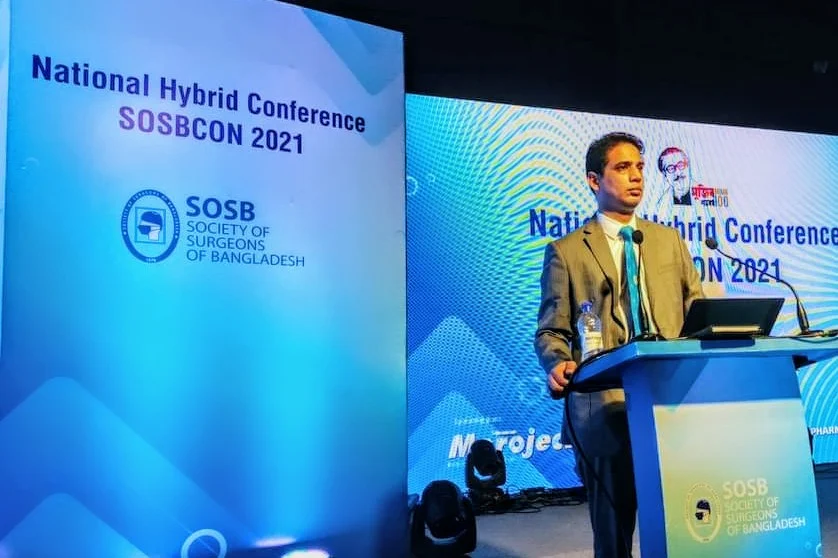
Dr. Shaon Shahriar completed an MS in Hepatobiliary Surgery at Bangabandhu Sheikh Mujib Medical University in 2019, one of very few structured routes into this subspecialty in Bangladesh. It followed sixteen years of general and emergency surgical practice rather than replacing it. He was elected a Fellow of the American College of Surgeons in 2020 and observed the liver transplant programme at Manipal Hospital, Bengaluru, in 2024.

He is currently Associate Professor of Hepatobiliary Surgery at Rajshahi Medical College, having held the same rank at Dhaka Medical College and served as Assistant Professor at Shaheed Suhrawardy Medical College. His academic record runs to fifteen peer-reviewed papers, five as first author, on chronic pancreatitis, hepatolithiasis, obstructive jaundice and periampullary disease.

MBBS 2003FCPS Surgery 2012MS Hepatobiliary Surgery 2019FACS 2020BMDC A-38726
PRIVATE CHAMBER
Aalok Healthcare & Hospital, Mirpur 10, Dhaka
SOCIETIES
SOSB · SELSB · Society of HPB Surgeons of Bangladesh
RESEARCH
15 peer-reviewed publications, 5 as first author
Why patients are referred here

Trained for the difficult end of one narrow field

Hepatobiliary and pancreatic surgery is one of the smallest surgical subspecialties in Bangladesh. Very few surgeons have completed a structured training pathway in it.
01

Structured subspecialty training

An MS in Hepatobiliary Surgery from BSMMU, followed by fellowship of the American College of Surgeons and liver transplant training at Manipal, Bengaluru.
02

Volume where it matters

Pancreatic and liver surgery reward repetition and punish improvisation. 63 Whipple procedures and 54 liver resections is a real series, not a rounded marketing figure.
03

An academic record you can check

Fifteen peer-reviewed publications, five as first author, in indexed journals. Every citation on this site is listed in full so you can look it up yourself.
04

Honest counselling

Not every gallstone needs an operation and not every tumour is operable. You will be told which category you are in, what the alternatives are, and what happens if you wait.
Conditions treated

What is treated, and how it is treated

Tap any condition for symptoms, how the decision to operate is made, and what recovery involves.
Blog Cat

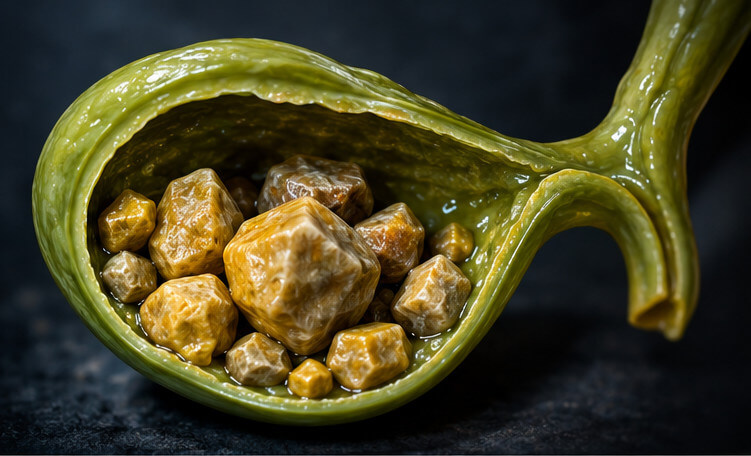
Gallstones

The commonest referral in this specialty and usually the most treatable.
Read More

Obstructive jaundice

Yellow eyes with dark urine and pale stools. A symptom, not a diagnosis.
Read More

Bile duct injury & stricture

Damage to the bile duct, usually after a gallbladder operation elsewhere.
Read More

Gallbladder cancer

Uncommon, often found incidentally after a routine gallbladder removal.
Read More

Liver tumours

Primary liver cancer and secondary deposits from bowel cancer.
Read More

Liver abscess & hydatid cyst

Infected collections and parasitic cysts within the liver.
Read More

Acute & chronic pancreatitis

Inflammation of the pancreas, from a single severe attack to years of pain.
Read More

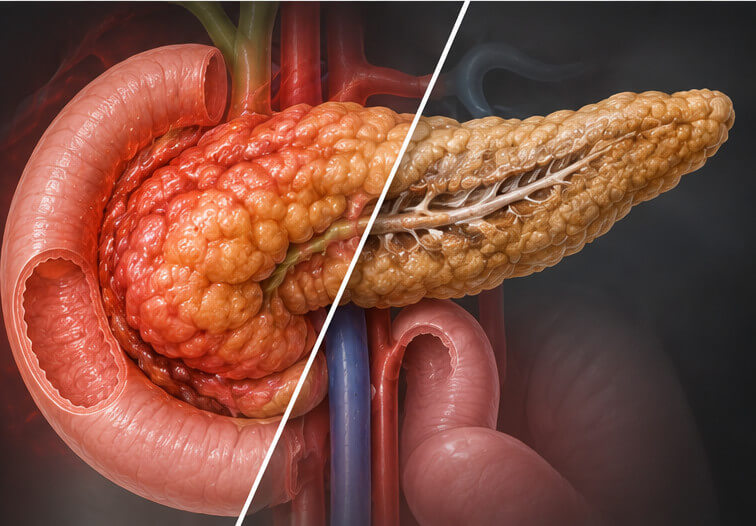
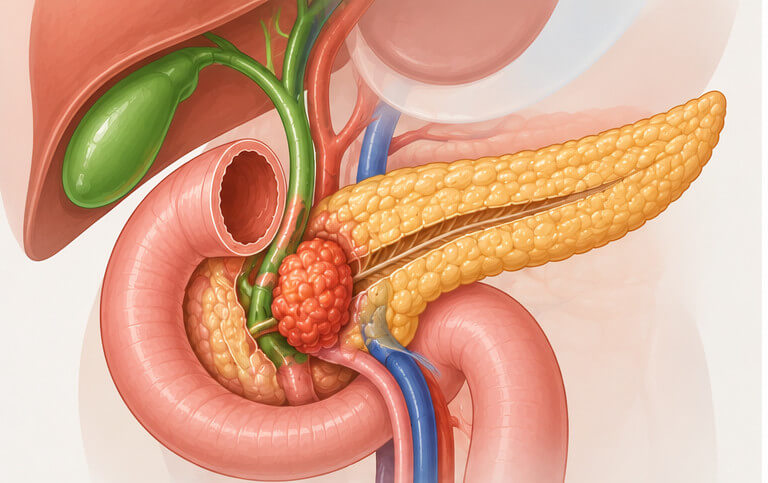
Pancreatic & periampullary tumours

The most technically demanding work in abdominal surgery.
Read More

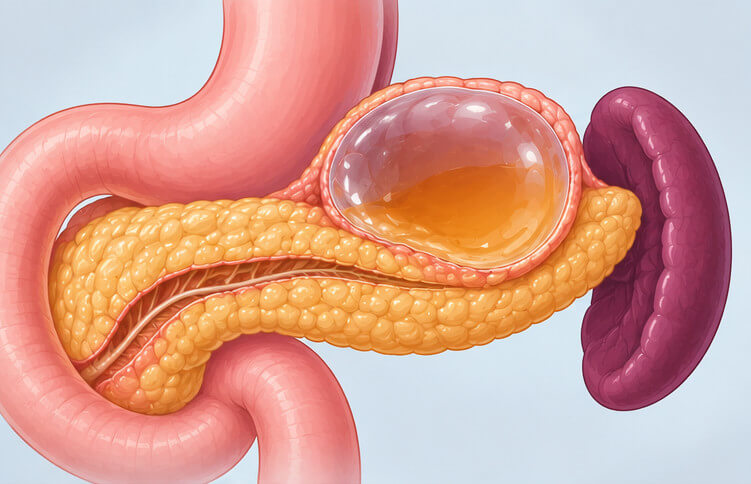
Pancreatic pseudocyst

A collection of fluid that forms after pancreatitis or injury.
Read More

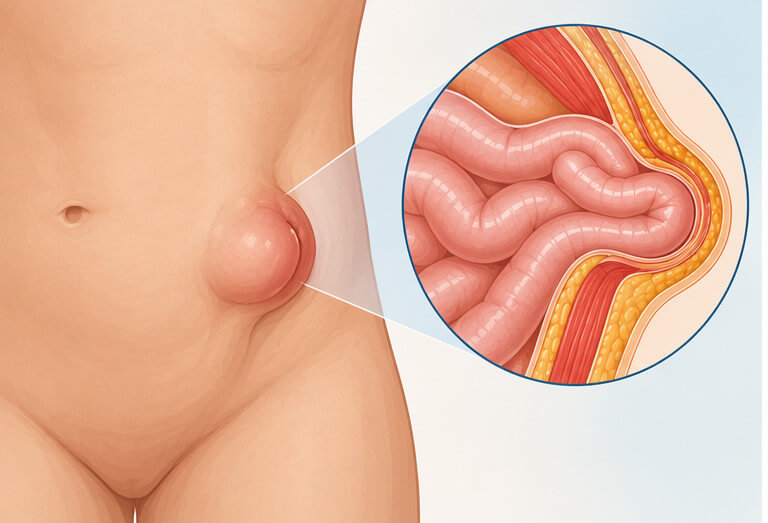
Hernia

Inguinal, umbilical, incisional and other abdominal wall hernias.
Read More

Emergency abdominal surgery

Perforation, obstruction, appendicitis, trauma and sepsis.
Read More
Signature procedures

Operative volume, itemised

Most surgeon websites quote one large total. These are the individual series, by procedure, as recorded in his curriculum vitae.
0
PERFORMED

Whipple procedure

Pancreaticoduodenectomy
For tumours of the pancreatic head and periampullary region. The head of the pancreas, duodenum, gallbladder and bile duct are removed, then the digestive tract is rebuilt. One of the most demanding operations in abdominal surgery.
ANAESTHESIA
General
STAY
10–14 days
RECOVERY
2–3 months
0
PERFORMED

Liver resection

Hepatectomy
Removal of the diseased segment of liver for tumour, large cyst, hydatid disease or injury. How much can safely be taken depends on tumour position relative to the hepatic veins and the volume of liver that will remain.
ANAESTHESIA
General
STAY
7–10 days
RECOVERY
6–8 weeks
0
PERFORMED

Triple bypass

For advanced pancreaticobiliary malignancy
When a tumour cannot be removed, bypass relieves jaundice, restores the passage of food and treats pain. It is palliative surgery done well, and it changes how the remaining time is lived.
ANAESTHESIA
General
STAY
7–12 days
RECOVERY
Palliative

ALSO: 63 LONGITUDINAL PANCREATICOJEJUNOSTOMY  ·  38 BILIARY RECONSTRUCTION FOR STRICTURE  ·  1000+ LAPAROSCOPIC CHOLECYSTECTOMY

Your journey

Surgery is one step in seven

Most of the work happens before the operating theatre and after it. Drag the timeline to see what to expect.
STEP 01

Consultation

History, examination, and a full review of everything you already have. Old reports matter more than new opinions.
45 TO 60 MINUTES
STEP 02

Investigation

Ultrasound, CT, MRCP, liver function tests, tumour markers. Ordered only where the result will change the decision.
3 TO 10 DAYS
STEP 03

The decision

Whether to operate, when, and by which approach. Explained to you and your family in plain language, with the alternatives set out.
SECOND VISIT
STEP 04

Preparation

Anaesthetic assessment, correction of jaundice and nutrition where needed, medication adjustment, and written consent.
1 TO 3 WEEKS
STEP 05

Operation

Performed with a fixed anaesthetic and nursing team. Your family is briefed as soon as the operation ends.
1 TO 8 HOURS
STEP 06

Recovery

Ward care, drain management, return to eating, early mobilisation, and daily review while you are an inpatient.
1 TO 14 DAYS
STEP 07

Follow up

Wound review, biopsy results explained in person, onward referral to oncology where needed, then surveillance.
ONGOING
DRAG OR SCROLL SIDEWAYS →
Chamber & visiting hours

Where he sees private patients

Call ahead or message on WhatsApp to confirm your serial before travelling.

Aalok Healthcare & Hospital

PRIVATE CHAMBER · MIRPUR 10, DHAKA
CHAMBER
MIRPUR 10, DHAKA
House 1 & 3, Road 2, Block B
Mirpur 10, Dhaka 1216
Sunday7:00 – 8:30 PM
Monday7:00 – 8:30 PM
Tuesday7:00 – 8:30 PM
Wednesday7:00 – 8:30 PM
Thursday7:00 – 8:30 PM
Friday & SaturdayClosed
Call for serialWhatsAppBook online

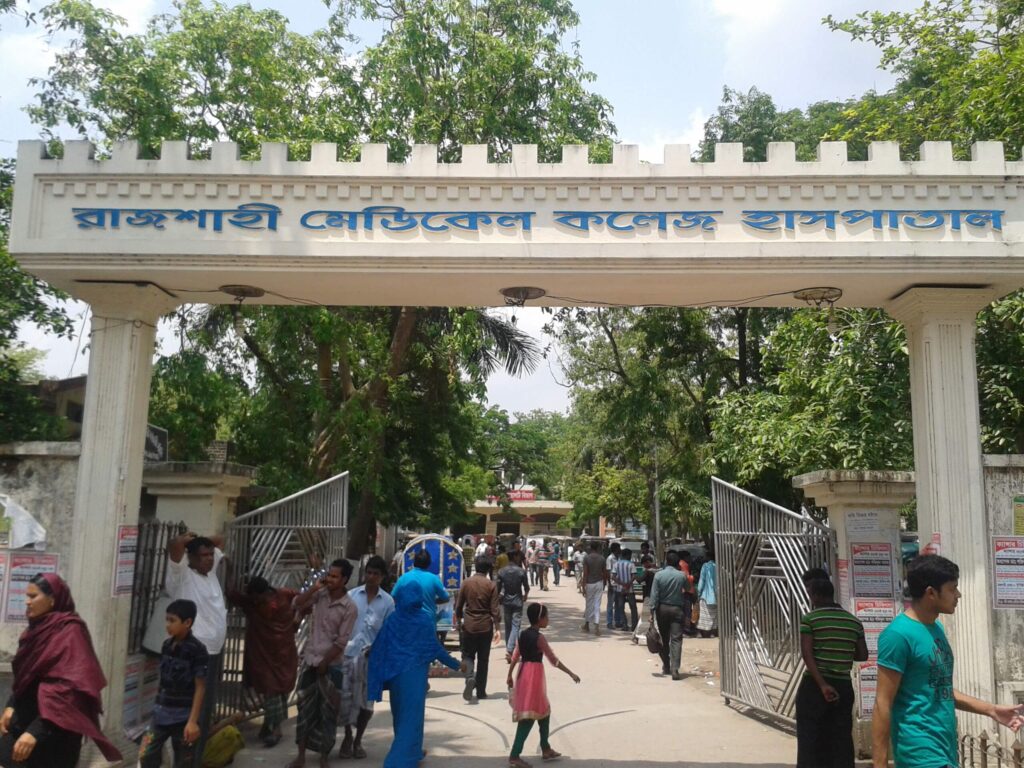
Rajshahi Medical College Hospital

GOVERNMENT POSTING · NOT A PRIVATE CHAMBER
CHAMBER
PLACEHOLDER · HOSPITAL PHOTOGRAPH
Department of Hepatobiliary Surgery
Rajshahi Medical College, Rajshahi
Post heldAssociate Professor
SinceDecember 2024
Public patientsThrough hospital OPD
Friday & SaturdayClosed
About the appointment
Appointments

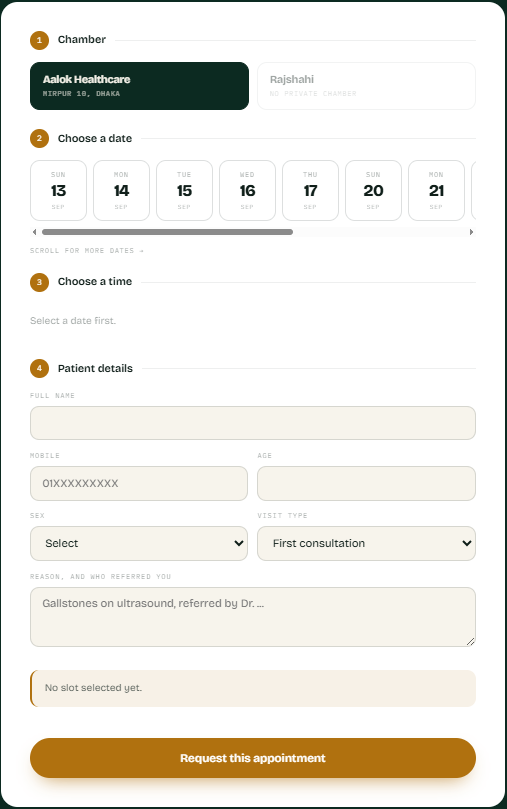
Request a consultation slot

Slots are held provisionally and confirmed by telephone. The request is not final until that call is made.
01

Bring everything

Every previous report, scan, prescription and discharge summary, including the ones you think are irrelevant. Imaging on disc, not only the printed report.
02

Bring someone with you

If a serious diagnosis is being discussed, a family member who can hear the conversation with you is worth more than notes taken afterwards.
03

Second opinions are welcome

If another surgeon has already advised an operation, bring their plan. A second opinion that confirms the first is still useful information.
04

Emergencies do not use this form

Fever with jaundice, severe pain, vomiting blood or a rigid abdomen mean an emergency department tonight, not an appointment next week.
Video & media

Explained in Bangla, for patients and families

Short videos answering the questions asked most often in the chamber. Replace these placeholders with real YouTube or Facebook embeds once the channel is live.

পিত্তনালীর পাথর কি? | What is Bile Duct Stone?

PLACEHOLDER · GALLSTONES

লিভারের হাইডাটিড সিস্টঃ কারণ, লক্ষণ ও চিকিৎসা | Hydatid Cyst of Liver

PLACEHOLDER · GALLSTONES

ক্রনিক প্যানক্রিয়াটাইটিস; প্যানক্রিয়াসের দীর্ঘকালীন প্রদাহ

PLACEHOLDER · GALLSTONES

লিভার ক্যান্সার কি? | What is Liver Cancer?

PLACEHOLDER · GALLSTONES

পিত্তনালীর ক্যান্সার কি? | What is Bile Duct cancer?

PLACEHOLDER · GALLSTONES
MEDIA APPEARANCESPLACEHOLDER · TV CHANNEL LOGOPLACEHOLDER · TV CHANNEL LOGOPLACEHOLDER · PRINT / ONLINEPLACEHOLDER · HEALTH PROGRAMME
Research & publications

Thirteen peer-reviewed papers, four as first author

Listed in full so you can look each one up. No competitor site in this specialty publishes its citations.
Research Cat

Md. Shah-paran Islam Probal, Jareen Labiba Lutfor , Md. Kayes Uddin Ahamed , Anisur Rahman , Md. Mozahedul Karim , A.K.M. Faisol Kabir , Mohammad Abdul Awal and Shaon Shahriar

Gestational Gigantomastia in a 37-Year-Old Woman: Managed Successfully by Multidisciplinary Approach

Md. Shah-paran Islam Probal, Jareen Labiba Lutfop; A.KM Faisol Kabir, Md_ Mozahedul Karim, Omar Siddiqui, Mohammad Ashraf Uddin Khan, Shaon Shahriar

Prolonged survival in advanced gallbladder carcinoma following multimodal palliative management : A case report

Shimu F, Ahmed A, Shahriar S, Yasmin T, Amin MB, Hasan AFU.
ASIAN JOURNAL OF CASE REPORTS IN SURGERY · 2025;8(1):1–6

Shimu F, Ahmed A, Shahriar S, Yasmin T, Amin MB, Hasan AFU.

ASIAN JOURNAL OF CASE REPORTS IN SURGERY · 2025;8(1):1–6

Das BC, Rahman MM, Biswas AK, Shahriar S, Ahmed A, Khan ZR.

ASIAN JOURNAL OF CASE REPORTS IN SURGERY · 2025;8(1):1–6

Shimu F, Ahmed A, Shahriar S, Yasmin T, Amin MB, Hasan AFU.

ASIAN JOURNAL OF CASE REPORTS IN SURGERY · 2025;8(1):1–6

Shimu F, Ahmed A, Shahriar S, Yasmin T, Amin MB, Hasan AFU.

ASIAN JOURNAL OF CASE REPORTS IN SURGERY · 2025;8(1):1–6

Shimu F, Ahmed A, Shahriar S, Yasmin T, Amin MB, Hasan AFU.

ASIAN JOURNAL OF CASE REPORTS IN SURGERY · 2025;8(1):1–6

Shimu F, Ahmed A, Shahriar S, Yasmin T, Amin MB, Hasan AFU.

ASIAN JOURNAL OF CASE REPORTS IN SURGERY · 2025;8(1):1–6

Shimu F, Ahmed A, Shahriar S, Yasmin T, Amin MB, Hasan AFU.

ASIAN JOURNAL OF CASE REPORTS IN SURGERY · 2025;8(1):1–6
Patient feedback

What patients say afterwards

4.8

PLACEHOLDER · connect to live Google reviews before launch
Placeholder review text. Pull real reviews through the Google Places API rather than typing them in, so the rating and count stay current and independently verifiable.
Patient name
GOOGLE REVIEW
Placeholder review text. Pull real reviews through the Google Places API rather than typing them in, so the rating and count stay current and independently verifiable.
Patient name
GOOGLE REVIEW
Placeholder review text. Pull real reviews through the Google Places API rather than typing them in, so the rating and count stay current and independently verifiable.
Patient name
GOOGLE REVIEW
DO NOT WAIT

Signs that need an emergency
department tonight, not an appointment

Fever with shivering alongside yellow eyesSevere upper abdominal pain going through to the backVomiting blood, or black tarry stoolsYellow eyes with pale stools and dark urineA rigid, board hard abdomenConfusion in someone with known liver disease
Go to the nearest hospital emergency department. Do not wait for chamber hours.
Second opinion & referral

Two ways people arrive here

Call ahead or message on WhatsApp to confirm your serial before travelling.
FOR PATIENTS

Getting a second opinion

Being told you need a major operation is not a reason to accept the first plan offered. In hepatobiliary disease the choice of operation, its timing, and whether to operate at all vary between surgeons.
01Bring every scan on disc, not only the printed report
02Bring all blood results, including old ones
03Bring any biopsy or histopathology report
04Bring your current prescription list
05Bring a family member who can hear the discussion with you
Book a second opinion
FOR COLLEAGUES

Referring a case

Being told you need a major operation is not a reason to accept the first plan offered. In hepatobiliary disease the choice of operation, its timing, and whether to operate at all vary between surgeons.
01Send imaging on disc or a shared link where possible
02Include LFTs, CBC, coagulation profile and tumour markers
03State operative findings if surgery has already been attempted
04Note current clinical state, drains and antibiotics
05Call directly for anything time critical
Referral line
Common questions

Asked in the chamber every week

No. Stones found by chance on an ultrasound in someone with no symptoms usually do not need an operation. Surgery is advised when stones cause pain, infection, jaundice or pancreatitis, and in certain higher risk situations such as a very large stone or a calcified gallbladder wall. You will be told which group you are in.

Yes, in almost all cases. The gallbladder stores bile rather than producing it, so the liver continues to supply bile directly into the intestine. Some people notice looser stools with very fatty meals for a few weeks. Long term dietary restriction is not usually necessary.

It removes the head of the pancreas, the duodenum, the gallbladder and the bile duct, then rebuilds the digestive tract with three new joins. The rebuilding is what takes the time, and the quality of those joins determines the recovery. It should only be done where hepatobiliary expertise and the right theatre and ward support exist.

Often, yes. The liver regenerates, which is what makes resection possible. Whether it is safe depends on where the tumour sits relative to the hepatic veins and how well the remaining liver is functioning. Both are assessed before the operation with scans and blood tests, not discovered during it.

For a straightforward gallbladder, commonly two to four weeks: consultation, investigations, then a date. For liver and pancreatic disease it takes longer, because staging scans, correction of jaundice and nutrition, and anaesthetic assessment all have to be completed first. Emergencies are treated on the day.

Yes, and it is reasonable to want one before major surgery. Bring your scans on disc, all blood results, any biopsy report and your prescription list. A second opinion may confirm the original plan, and that in itself is useful information.

Every previous report, scan, prescription and discharge summary you have, including old ones you think are irrelevant. Bring imaging on disc where possible rather than only the printed report. Bring a family member if a serious diagnosis is being discussed.

His government post is Associate Professor of Hepatobiliary Surgery at Rajshahi Medical College, where public patients are seen through the hospital outpatient department. Private consultations are at Aalok Healthcare and Hospital, Mirpur 10, Dhaka. Call to confirm the day before travelling.
Not sure whether you need an operation at all?

That is exactly the question worth asking a specialist. Bring your reports and find out.
CALL FOR APPOINTMENT
Call nowBook online
Gallbladder

Gallstones

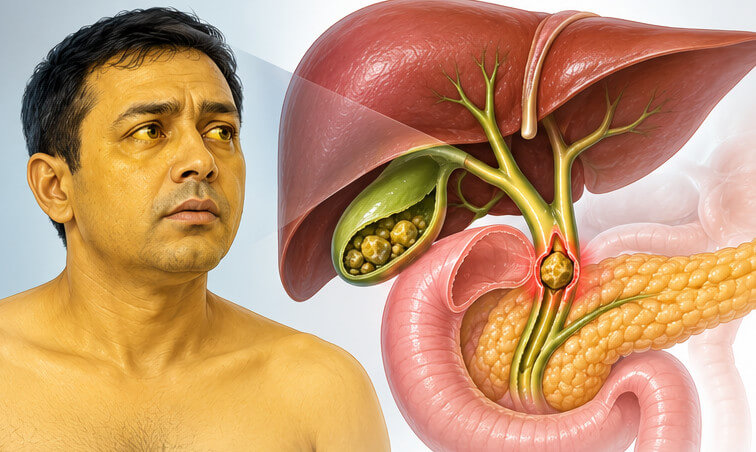
Hard deposits that form in the gallbladder. Very common, and only some need surgery. Trouble starts when a stone blocks the outlet or moves into the bile duct.

1500+

laparoscopic cholecystectomies performed
SYMPTOMS THAT BRING PATIENTS IN
Persistent upper abdominal pain
Pain spreading to the back or right shoulder
Nausea or vomiting after eating
Repeated bloating and indigestion
HOW THE DECISION IS MADE
An ultrasound confirms the stones. Surgery is advised when they cause pain, inflammation or complications. Stones found by chance, causing nothing, are often just watched.
THE OPERATION
Keyhole (laparoscopic) removal of the whole gallbladder. Open surgery only when inflammation or scarring makes keyhole unsafe.
ANAESTHESIA
General
STAY
2 days
RECOVERY
1-2 weeks
Book a consultation
Gallbladder

Obstructive jaundice

Yellow eyes and skin, dark urine, pale stools, itching. It is a symptom, not a diagnosis. It means the flow of bile is blocked somewhere, and the cause must be found.

1000+

laparoscopic cholecystectomies performed
SYMPTOMS THAT BRING PATIENTS IN
Yellow eyes and skin
Dark urine with pale, putty-coloured stools
Itching all over
Weight loss or pain, depending on the cause
HOW THE DECISION IS MADE
Blood tests, ultrasound and MRCP or CT find the level and the cause. The block may be a stone in the duct, a narrowing or tumour of the duct wall, or a tumour pressing from outside, most often cancer of the pancreatic head. An ERCP can sometimes relieve the block and take samples.
THE OPERATION
Depends entirely on the cause: clearing a duct stone, stenting or repairing a narrowing, or removing a tumour when that is the source.
ANAESTHESIA
General, or sedation for ERCP
STAY
1–5 days
RECOVERY
Depends on the cause
Book a consultation
Gallbladder

Bile duct injury & stricture

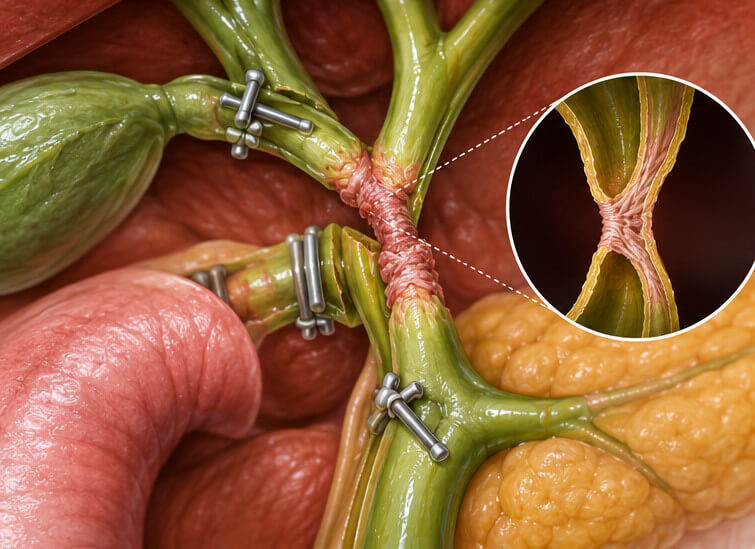
The bile duct is scarred or narrowed, most often after a gallbladder operation done elsewhere. Bile cannot drain freely and backs up.

38

laparoscopic cholecystectomies performed
SYMPTOMS THAT BRING PATIENTS IN
Jaundice appearing after a recent gallbladder operation
Fever and chills from infected bile
Pain in the right upper belly
Persistent itching
HOW THE DECISION IS MADE
An MRCP maps exactly where and how badly the duct is damaged. Timing matters, and early referral to a hepatobiliary unit gives the best long-term result.
THE OPERATION
Reconstruction, usually joining the healthy duct above the injury to a loop of intestine (hepaticojejunostomy). Stenting is enough in selected cases.
ANAESTHESIA
General
STAY
7–10 days
RECOVERY
4-6 weeks
Book a consultation
Gallbladder

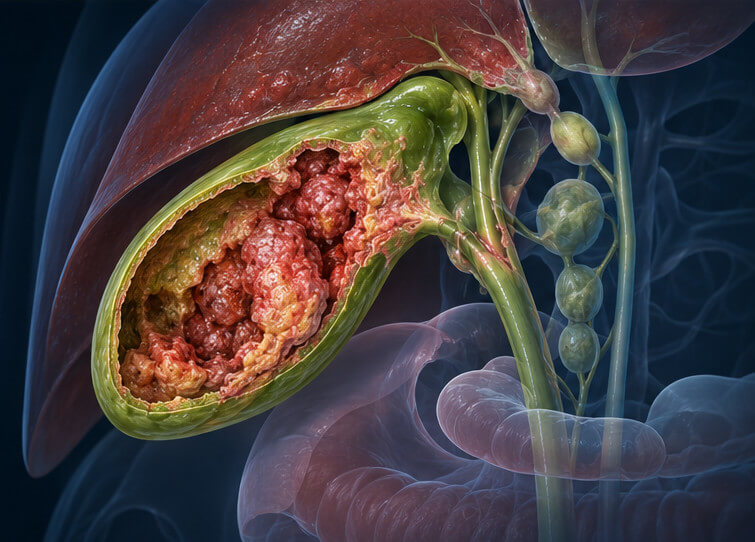
Gallbladder cancer

Uncommon, and often found by chance when a gallbladder is removed for stones and the tissue is examined afterward.

1000+

laparoscopic cholecystectomies performed
SYMPTOMS THAT BRING PATIENTS IN
Often none in the early stage
Pain in the right upper belly
Weight loss and poor appetite
Jaundice if it is advanced
HOW THE DECISION IS MADE
CT and staging decide whether surgery can cure it. An early cancer found inside a removed gallbladder may need a second, wider operation.
THE OPERATION
Extended (radical) removal, taking the neighbouring bed of liver and the nearby lymph nodes. The extent depends on the stage.
ANAESTHESIA
General
STAY
5–10 days
RECOVERY
4-8 weeks
Book a consultation
Liver

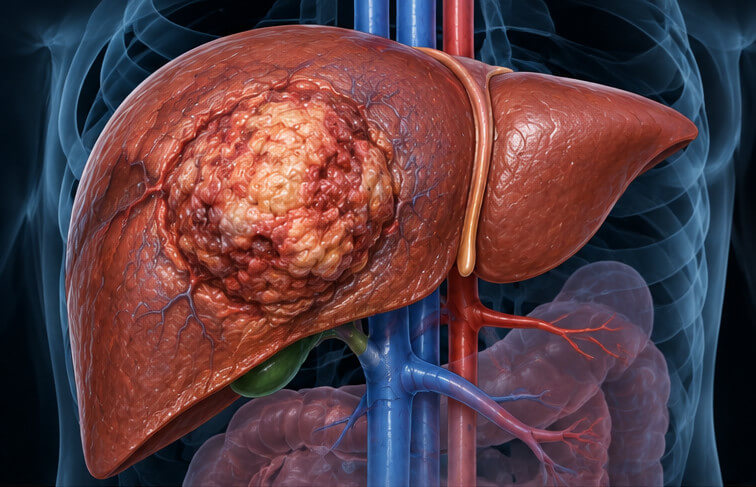
Liver tumours

Primary liver cancer, or secondary deposits that have spread from bowel and other cancers. Some liver tumours are benign.

54

laparoscopic cholecystectomies performed
SYMPTOMS THAT BRING PATIENTS IN
Often none until the tumour is large
A dull ache or fullness in the right upper belly
Unexplained weight loss
Jaundice if a tumour sits centrally
HOW THE DECISION IS MADE
CT and MRI define the tumour and, just as important, how much healthy liver would remain. The condition of the rest of the liver decides how much can be removed safely.
THE OPERATION
Liver resection, removing the tumour with a margin of healthy tissue while leaving enough working liver behind.
ANAESTHESIA
General
STAY
5–10 days
RECOVERY
4-8 Weeks
Book a consultation
Liver

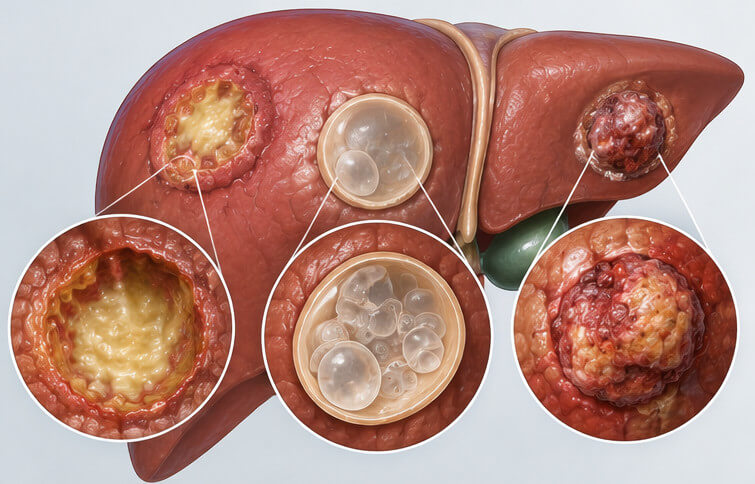
Liver abscess & hydatid cyst

Infected collections (abscess) or parasitic cysts (hydatid) that form inside the liver. They are different problems handled in different ways.

1000+

laparoscopic cholecystectomies performed
SYMPTOMS THAT BRING PATIENTS IN
Fever with chills
Pain in the right upper belly
Poor appetite and weight loss
Feeling generally unwell for days
HOW THE DECISION IS MADE
Ultrasound or CT and blood tests tell the two apart. Many abscesses clear with a drain and antibiotics. A hydatid cyst must be handled carefully to avoid spilling its contents.
THE OPERATION
Image-guided drainage for an abscess; surgery or the PAIR technique for hydatid, with anti-parasitic medicine before and after.
ANAESTHESIA
General, or local for drainage
STAY
3–7 days
RECOVERY
2-4 Weeks
Book a consultation
Pancreas

Acute & chronic pancreatitis

Inflammation of the pancreas, ranging from a single severe attack to years of pain and gradual damage.

63

longitudinal pancreaticojejunostomy (drainage) procedures performed
SYMPTOMS THAT BRING PATIENTS IN
Severe upper belly pain boring through to the back
Pain worse after eating
Weight loss and oily, floating stools
Diabetes developing over time
HOW THE DECISION IS MADE
Most acute attacks settle without surgery. CT and MRCP assess the damage. Surgery is considered for constant pain, a blocked and widened pancreatic duct, or complications.
THE OPERATION
Drainage of the pancreatic duct (longitudinal pancreaticojejunostomy), or a combined drainage-and-resection. If gallstones caused it, they are dealt with separately.
ANAESTHESIA
General
STAY
7–10 days
RECOVERY
4-6 Weeks
Book a consultation
Pancreas

Pancreatic & periampullary tumours

Tumours of the head of the pancreas and the area where the bile and pancreatic ducts drain into the bowel. This is the most technically demanding work in abdominal surgery.
Stat: 63 Whipple procedures performed

1000+

laparoscopic cholecystectomies performed
SYMPTOMS THAT BRING PATIENTS IN
Painless jaundice, yellow eyes with dark urine and pale stools
Weight loss and poor appetite
Upper belly or back pain
New-onset diabetes
HOW THE DECISION IS MADE
A pancreatic-protocol CT and staging decide whether the tumour can be removed. If jaundice is severe, a stent may relieve it before surgery.
THE OPERATION
A Whipple procedure (pancreaticoduodenectomy) for tumours that can be removed. When removal is not possible, a bypass relieves the jaundice and any blockage to the stomach.
ANAESTHESIA
General
STAY
10–15 days
RECOVERY
6-8 weeks
Book a consultation
Pancreas

Pancreatic pseudocyst

A collection of fluid that forms after an attack of pancreatitis or an injury to the pancreas.

1000+

laparoscopic cholecystectomies performed
SYMPTOMS THAT BRING PATIENTS IN
Fullness or pain in the upper belly
Feeling full after small meals
Nausea and vomiting
A lump felt in the upper abdomen.
HOW THE DECISION IS MADE
A CT confirms it and, importantly, times the treatment. Many small cysts settle on their own. Draining too early, before the wall has matured, causes problems.
THE OPERATION
Internal drainage, joining the cyst to the stomach or a loop of intestine, done by endoscopy or by surgery.
ANAESTHESIA
General
STAY
5–8 days
RECOVERY
2-4 weeks
Book a consultation
General

Hernia

A weak point in the abdominal wall through which tissue pushes out. Inguinal, umbilical, incisional and other wall hernias.

1000+

laparoscopic cholecystectomies performed
SYMPTOMS THAT BRING PATIENTS IN
A bulge that appears on straining and eases when lying down
A dragging ache
Pain on lifting
Sudden severe pain if the hernia becomes trapped, which is an emergency
HOW THE DECISION IS MADE
Usually diagnosed by examination, with ultrasound or CT for uncertain or complex cases. Repair is advised to prevent the hernia trapping bowel.
THE OPERATION
Mesh repair, keyhole or open depending on the type and any previous surgery.
ANAESTHESIA
General or spinal
STAY
1–2 days
RECOVERY
2-4 weeks
Book a consultation
General

Emergency abdominal surgery

Urgent operations for a perforation, a blockage, appendicitis, trauma or severe infection in the abdomen.

1000+

laparoscopic cholecystectomies performed
SYMPTOMS THAT BRING PATIENTS IN
Sudden severe belly pain
A hard, tender abdomen
Vomiting and being unable to pass stool or wind
Fever and a racing pulse from sepsis
HOW THE DECISION IS MADE
Rapid assessment, blood tests and a CT where time allows. Some conditions need the operating theatre without delay.
THE OPERATION
Depends on the cause: repairing a perforation, relieving an obstruction, removing a diseased organ, or controlling bleeding or infection.
ANAESTHESIA
General
STAY
Varies with severity
RECOVERY
Varies with severity
Book a consultation